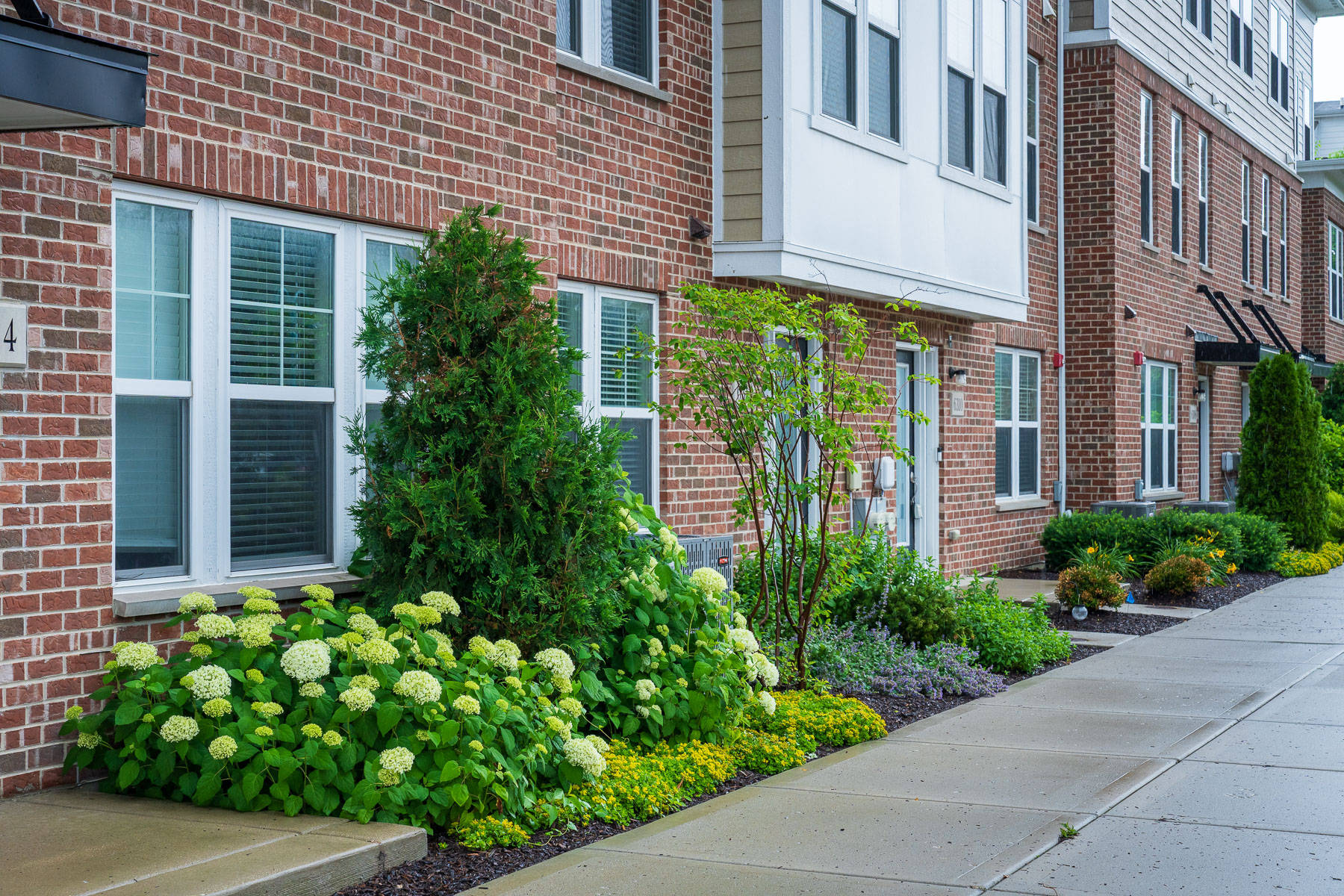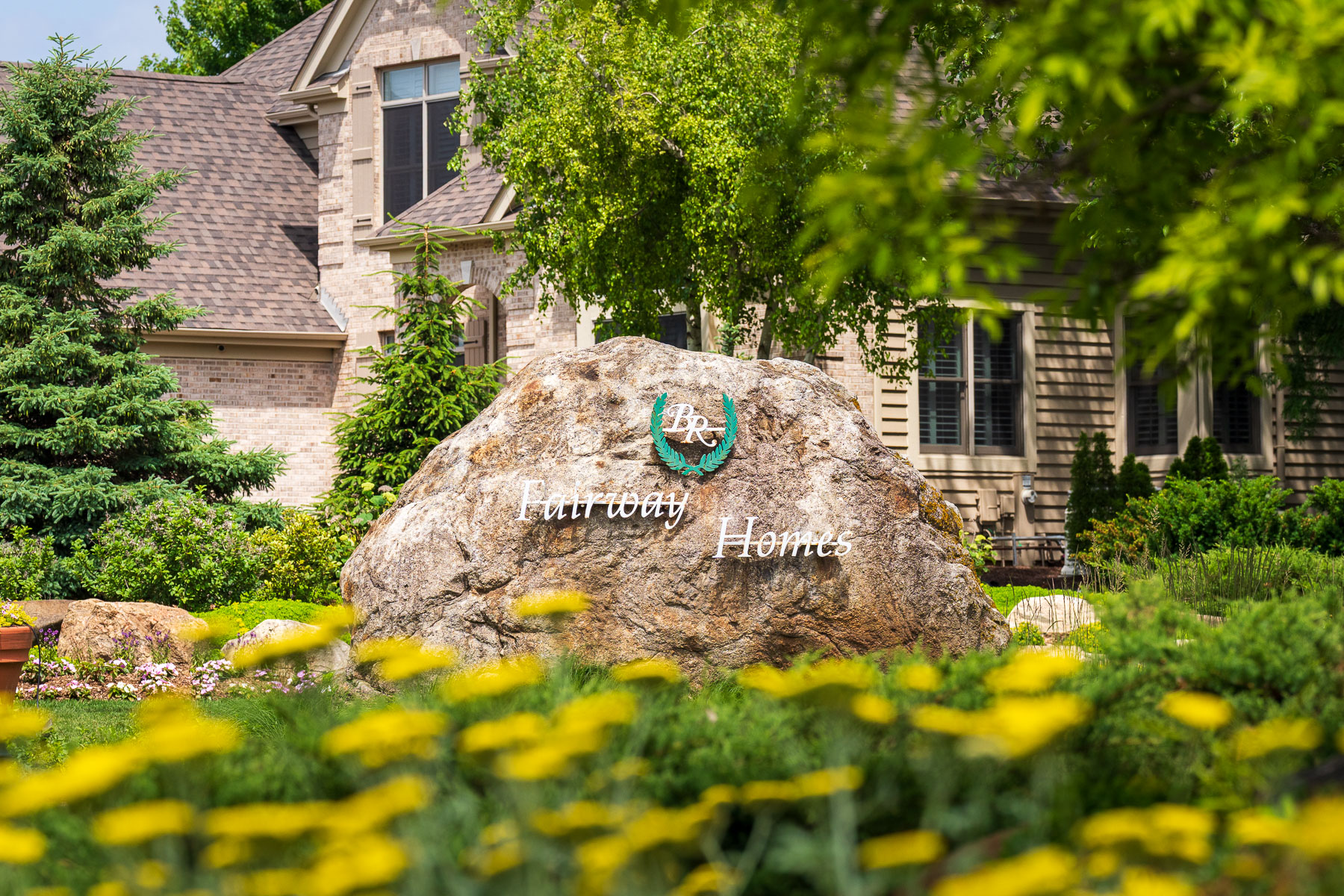

Every part of your property has a job to do, and your entryway is no exception. The issue is, your entrance’s “job” is multifaceted – it needs to look welcoming, make a great first impression, guide your visitors, and safely usher them into your property.
Right smack dab in the middle of all of those jobs is your signage. And while your signage should look nice, it should also be easy to manage.
The problem with stunning landscape around signage is that, sure, it looks good – but even the nicest-looking signage can lose its initial impact when it's being overtaken by overgrown shrubs, tired-looking plants, or a plant bed that's seen better days.
The flip side of that argument is that beautiful landscaping can make your signage stand out, create a more professional entrance, and even improve your property's overall curb appeal.
It’s not just about picking out pretty flowers, though.
Here in Chicagoland, we need hardy plants that can make it through freezing winters, road salt, spring rain, summer heat, and everything else in between. They also need to stay appropriately sized so your sign doesn't disappear behind a wall of shrubs a few years after installation.
No matter what you’re managing – an HOA entrance, an office campus, an industrial property – thoughtful planting and landscaping around signage can make a noticeable difference.
Curious about how all this works? Let’s look at some practical signage landscaping and plant bed ideas to help you figure out what could be a great entrance refresh for your property.
What's Inside This Signage Landscaping Guide
- Does landscaping around signage even matter?
- Five of our favorite planting ideas for commercial signage
- What to consider when choosing plants for commercial signage
- Keeping signage landscaping looking good through Chicagoland's seasons
- A few commercial signage landscaping FAQs: what you should know
- Give your property's signage the landscape refresh it deserves
Does Landscaping Around Signage Even Matter?
The short answer here is simple: Yes.
Do us a favor and think about the entrance to your property.
Is your sign easy to spot? Does the surrounding landscape look professional? Does it give visitors a sense of what they can anticipate from the rest of the property?
The fact of the matter is that your signage and landscaping play a bigger role in your property's overall appearance and experience than you might initially think.
Think about it from a community association's perspective: A well-maintained entrance helps create neighborhood pride and gives residents something to feel good about coming home to.
For commercial properties, it creates a professional first impression that sets the tone for visitors and customers. For industrial facilities, the priority is often pretty straightforward and supported by the landscaping: make sure delivery drivers, vendors, and visitors can easily identify the property.
But a poorly planned sign and surrounding plant bed can quickly become a maintenance headache. Growing shrubs, spreading perennials, weedy areas, and struggling plants can all detract from the goal of the sign.
Before long, the landscaping that was supposed to enhance your entryway is now hiding the sign – and worse, could be requiring more attention than the rest of the landscape.
Commercial signage landscaping does matter, but it needs to be treated like a strategic landscape enhancement.
Five of Our Favorite Planting Ideas for Commercial Signage
Thankfully, the world of landscaping is a creative, fluid one – there are several ways to approach a commercial sign bed.
What you choose will completely depend on the available space, your property's style, your budget, and how much maintenance you're prepared to take on.
Ultimately, it’s up to you what you pursue. But if you’re looking for inspiration, we recommend checking out these five ideas.
Create a Layered Planting Bed
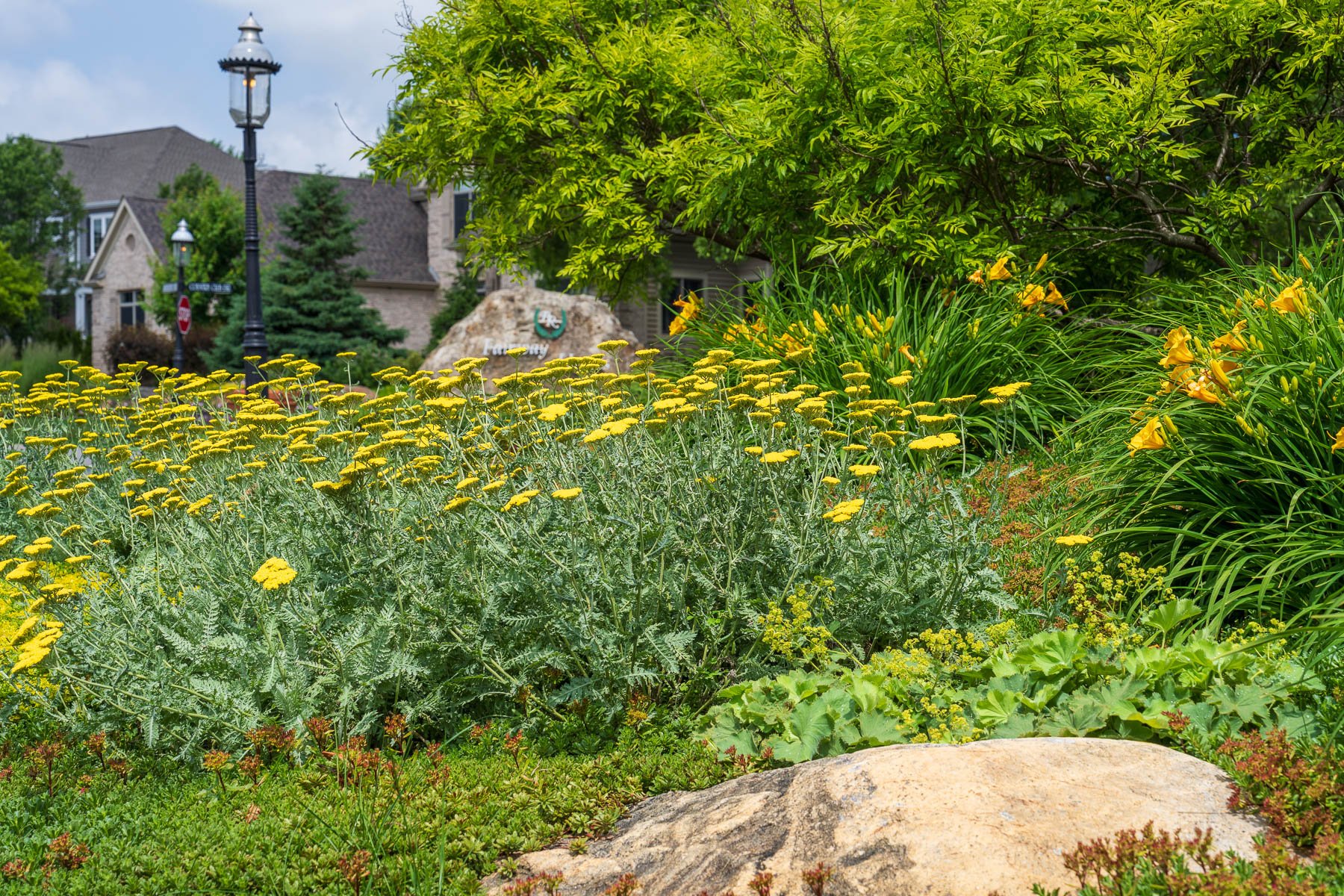
A layered planting design highlights visual interest and focuses on plants of different heights, textures, and forms. The goal is to draw the eye without competing with the rest of the landscape.
Depending on your space, you could install low-growing groundcovers along the front edge, compact perennials or ornamental grasses through the middle, and properly-sized shrubs toward the back or sides.
That’s just one idea – and the options are endless. No matter what you do, though, the trick is to leave enough breathing room around the actual signage so it can always be seen.
The nice thing about layering is that it also gives you more opportunities to incorporate seasonal interest. So, instead of leaning on one flowering period alone, you can combine foliage, flowers, and different plant forms to create a more complete look that blooms with the appropriate seasons.
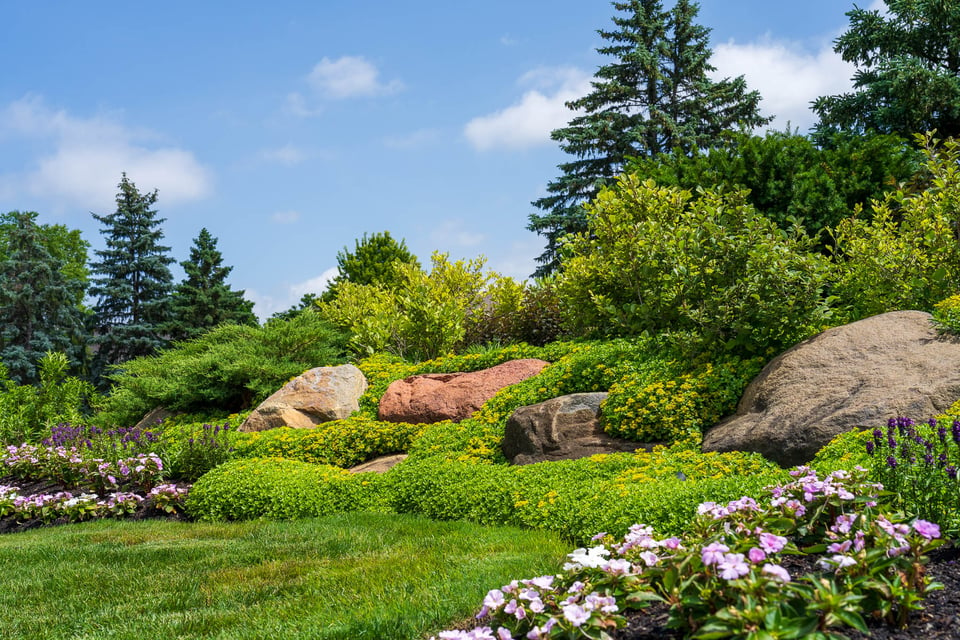
Use Low-Growing Plants to Keep the Sign Visible
The idea of “less is more” does track in commercial landscaping – especially when it's done right.
If your monument sign is sitting close to a roadway, sidewalk, or driveway, opting for low-growing plants can give you a chance to incorporate all the color and texture you’re after without running the risk of visual obstructions.
We often recommend groundcovers and shorter perennials for sign beds where taller shrubs would grow quickly or overwhelm the space.
A few area-appropriate options worth considering for Chicagoland sites could include:
- Pennsylvania sedge: A low-growing native sedge that can provide color and texture while staying low to the ground
- Lanceleaf coreopsis: A flowering perennial that adds seasonal color and typically reaches about 1 to 2 feet (so not too high)
- Black-eyed Susan: A familiar summer-flowering option for sunny planting areas.
- Purple prairie clover: This adds interesting flower structure and works well in most sunny locations
Obviously, what you choose will be based on what works best for your property – you’ll need to consider sun exposure, soil moisture, drainage, and salt exposure. All of these elements can influence which plants will perform best in your area.

Incorporate Ornamental Grasses for Texture
Ornamental grasses are an incredible “hack” for signage landscapes that won’t distract or detract.
These types of grasses add movement, texture, and even seasonal color. Just like with other types of plants and shrubs, your property’s soil, sun exposure, and conditions will determine what works best for you.
Some options – like Prairie Dropseed (a native Illinois grass), for example – can bring a softer, more natural appearance to a sign bed. Grasses like these can be particularly attractive in larger monument sign beds where there's enough planned room to accommodate them at their full, mature size.
Still, remember that some grasses do grow taller and wider than others – so they will likely require seasonal cutbacks before their new growth takes over and obstructs your signs.
Add Seasonal Color Without Overcomplicating the Design
Seasonal color often makes the most visual impact in signage landscape.
In our experience, annual flowers and seasonal plantings add color around what could be considered an otherwise simple monument sign. You might introduce spring color, incorporate summer flowers, and refresh the bed with fall interest.
We recommend using seasonal flowers as accents instead of asking them to do all the heavy lifting year-round. If you have a consistent foundation year-round, the seasonal elements can change throughout without needing to do a full overhaul of every plant.
And if you have multiple entrances, consider how maintaining a consistent seasonal color palette can also create a more cohesive appearance.
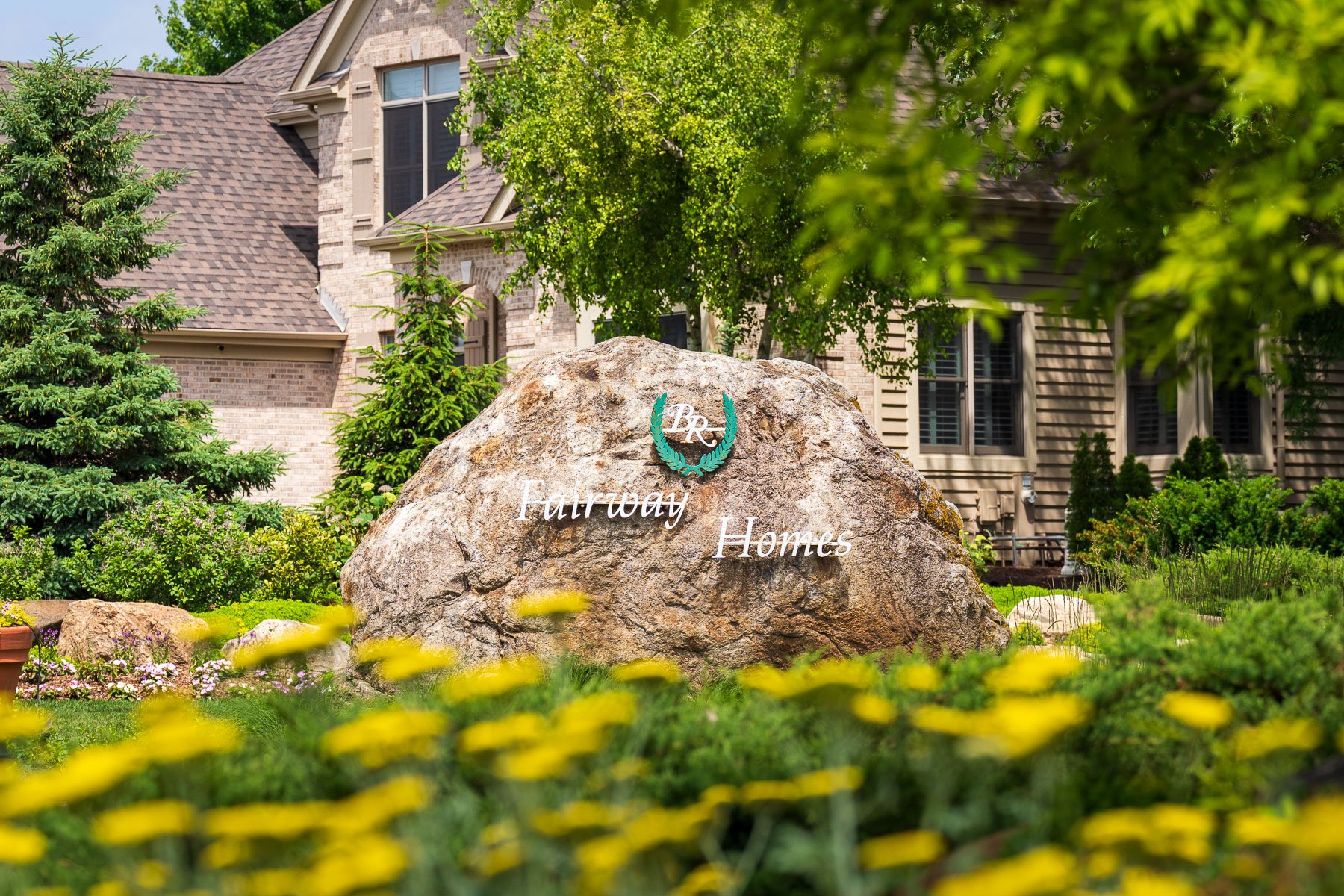
Keep It Simple With a Clean, Structured Design
A lot of what you choose for your landscape will depend on the function and purpose of your property. Not every commercial spot will need an elaborate or eye-catching design. It all depends on the purpose of your space.
For warehouses, industrial facilities, and properties where operational practicality comes first, a clean and straightforward design is often the better choice. You could opt for defined plant beds, limited color palettes, some low groundcover that won’t obstruct views, and a few shrub accents for a pop of personality.
Other types of properties – commercial buildings and HOA communities, for example – could benefit from a more ornate, eye-catching design that intrigues all who pass by it.
What to Consider When Choosing Plants for Commercial Signage
Plant and flower selection has a lot to do with aesthetics and visuals, but those are by no means the only considerations for choosing the right plants.
When it comes down to the selection process, we always encourage our clients to think about these elements:
- The Full, Mature Plant Size: It’s fun to plant beautiful things and watch them grow – but many people don’t consider how big or wide the plants will get when they’re fully mature. Unfortunately, if you don't account for mature size, you'll end up with plants covering the sign, crowding one another, or requiring constant pruning.
- Visibility & Sightlines: Above all, your sign needs to be able to do its job. If your landscape makes that harder, then it’s not a good landscape design. Consider how the sign looks from approaching vehicles, nearby roads, sidewalks, and entrance drives. This is where seasonal growth joins the conversation, too. More maintenance might be necessary in the summer to maintain those sightlines. And if so, is that the right plant for this area?
- Sun Exposure, Soil, & Drainage: Does the sign bed receive full afternoon sun? Is it shaded? Does water collect after a heavy rain? Chicagoland properties have a wide range of growing conditions. Plant selection needs to account for soil conditions, drainage, sunlight, and moisture.
- Winter Conditions, Freezing, & Road Salt: Winter can be rough on Chicagoland landscaping. Consider salt-tolerant plant varieties that can stand up to deicing salt, snow storage, and plowed snow. Also consider where snow and runoff will go before finalizing signage design.
- Long-Term Maintenance Needs: Be realistic about how much attention the bed is going to receive. There’s no harm in saying “we don’t want to spend the time or the budget on constant maintenance for signage landscape.” Just be honest about it. If you need or want something low-maintenance, go for it. If you need or want something that’s higher maintenance, that’s fine, too. Just be realistic.
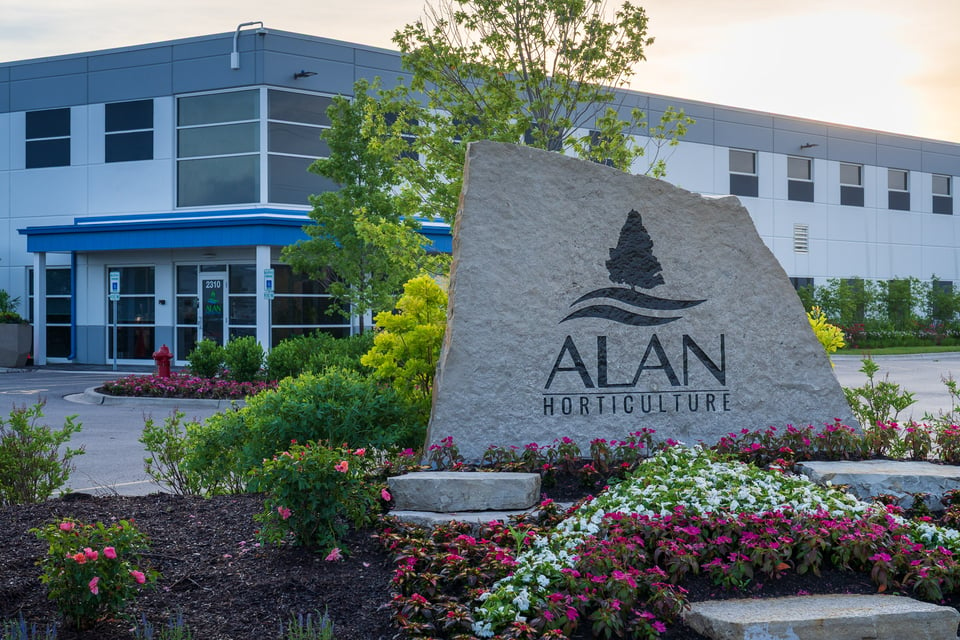
Keeping Sign Landscaping Looking Good Through Chicagoland's Seasons
You know that our seasons make our landscaping run the gamut. Something that looks phenomenal in October might look completely overgrown by June – which is why realistic maintenance is such an important part of the conversation.
In our Chicago suburbs, we ask our landscapes to transition through some pretty dramatic seasonal changes. Planning for those is just as important as installing landscaping.
Here’s what we suggest keeping in mind when thinking about your landscaping around signage:
- Spring: Once the snow melts, sign beds need attention. You’ll have to remove winter debris, inspect for salt damage, clock the bare areas, check in on drainage, and refresh any mulch where needed. Spring rains can also leave some planting beds saturated, so avoid assuming every area is ready for new plantings immediately.
- Summer: The growing season! Keep an eye on shrubs and grasses that may begin crowding the sign, monitor irrigation, and stay ahead of weeds. Hot, humid stretches and periods without rain can stress new plantings, so appropriate watering matters.
- Fall: Or as we call it, the perfect time for landscape improvements and enhancements. It's a useful time to evaluate declining plants, plan replacements, install appropriate trees and shrubs, and prepare beds for winter. Keep up with leaf removal, too, especially around smaller plants that can get buried.
- Winter: Snow, ice, road salt, and freeze-thaw cycles can all impact your landscape. Pay attention to snow storage, avoid piling plowed snow directly into sensitive planting beds, and make sure winter maintenance practices aren't creating problems for next spring.
We always highly recommend clients think about what their sign beds will look like when nothing is blooming or growing.
We have a relatively small window for growing season in Chicagoland, and there are plenty of months when flowering plants aren't going to put on a show. How can you account for that in your design?
A Few Commercial Signage Landscaping FAQs: What You Should Know
What are the best plants around commercial signs?
There’s no one-size-fits-all list for this. Ultimately, the best plants depend on your property and its conditions, like its available space, sunlight, soil conditions, drainage, and exposure to road salt. This is something we always walk through with our clients based on their unique property’s needs and conditions.
How tall should plants be around a monument sign?
There's no universal height requirement for this, especially since sign heights all vary. That said, plant height should be determined by the sign's design, lettering, location, surrounding sightlines, and the purpose of the sign or the property. Generally, lower plants near the front of the bed help maintain visibility, while taller plants can be positioned along the sides or behind the sign where appropriate (hence, layered beds – we’ve got a section on that at the beginning of this blog).
How do you landscape around signage without blocking visibility?
You have to start by evaluating the sign from the perspectives of approaching drivers and pedestrians – those sightlines matter the most. Choose plants based on mature height and width, keep important lettering clear, and always account for seasonal growth (like the growing season). Maintenance is always going to be a part of the conversation, too.
When is the best time to install plants around commercial signage in Chicagoland?
Mostly, spring and fall are the installation windows we recommend, but it does depend on the plant type and site conditions. Fall can be particularly fruitful for installing trees and shrubs, but spring offers opportunities to refresh beds and introduce seasonal color. It’s all based on what you’re installing, why you’re installing it, and what the end goal is.
Can commercial sign landscaping be improved in phases?
Sure! A phased enhancement plan can help tackle your goals without shutting down your property for any amount of time. We usually recommend prioritizing the most visible or problematic sign beds first, with additional improvements scheduled over future budget cycles.
Give Your Property's Signage the Landscape Refresh It Deserves
Your entrance deserves more than a fresh layer of mulch during your annual “refresh.” Remember, this is your property’s first impression – your handshake! – you’ll want to make it count.
With the right planning, landscaping around signage can enhance your overall curb appeal, clear up visibility, and create a more professional entrance. And when you do it right, it doesn’t have to tack on a ton of extra maintenance demands.
Our team at Alan Horticulture has been helping commercial and community properties throughout Chicagoland look their best since 1978. Whether you're refreshing one tired entrance or planning improvements across an entire portfolio, we're here to help you build what's next.
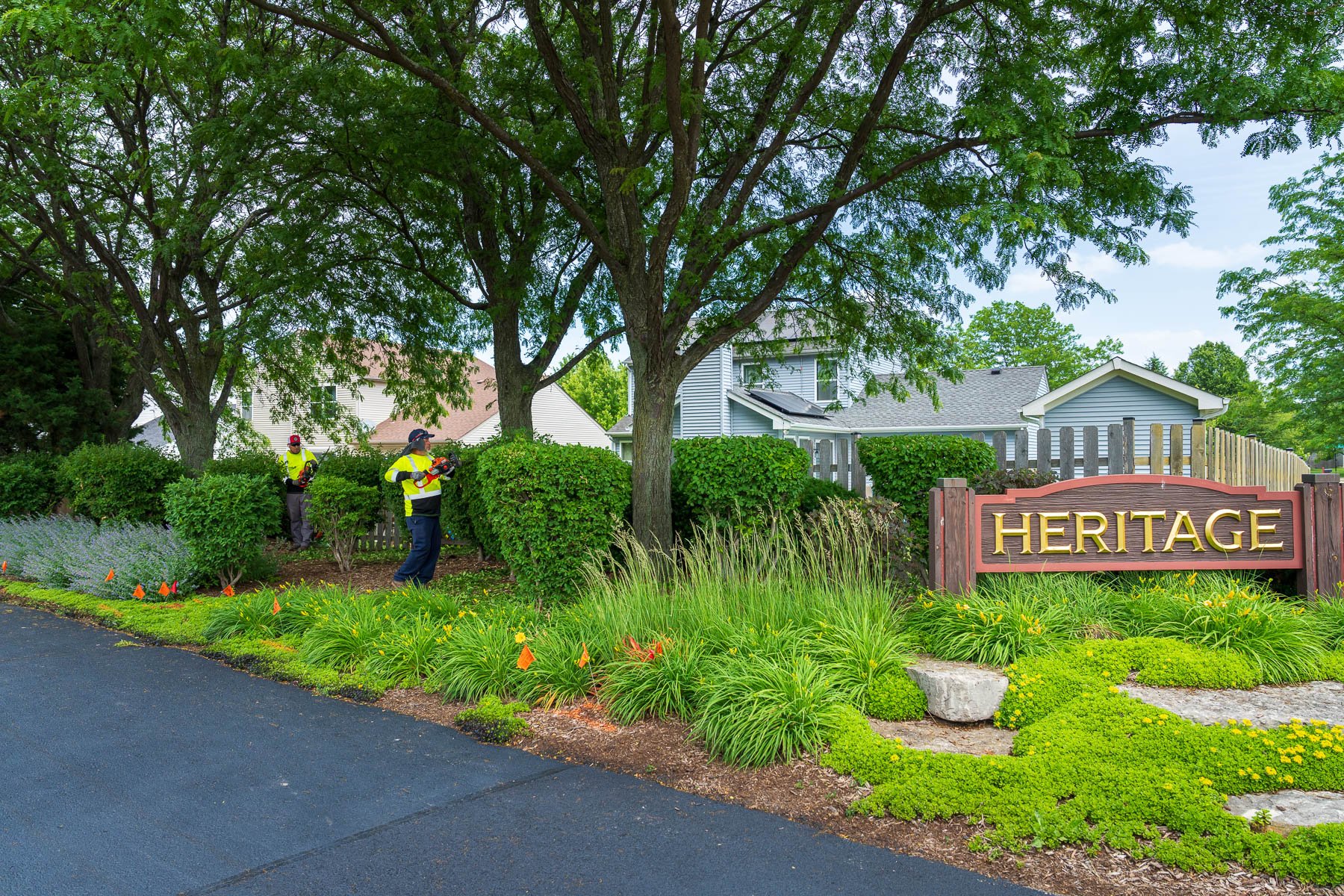
Ready to rethink your property's entrance? Contact us today to request a consultation and explore landscape enhancement solutions for your Chicagoland property.

About Jessica Smith
Lorem ipsum dolor sit amet consectetur. Interdum id sed ipsum gravida cras purus augue. Mattis lacinia vitae enim risus dolor tristique sit sed. Tortor tellus montes nisl et eget sagittis lectus nulla. At fermentum ut suscipit aliquet.